
How to Search Cases by Name
The Cumberland Online Court Records search gives you a single Party Name field. There are no separate boxes for first and last names. The search help recommends entering a full first and last name, and says that field accepts either a name or a case reference, but never both at once. A "Match all search terms" box is checked by default. Before you run the search, pick at least one court type and one case type.
- Identify whether the matter belongs in Circuit Court, General Sessions, Chancery, or a city court.
- Enter the complete name in Party Name and leave unrelated year or number fields blank at first.
- Select Criminal or Civil and the likely county court stream.
- Complete Turnstile, choose Find Now, and compare the returned court, year, number, and party role.
- Use the literal result filter for a large list, then record the exact search inputs used.
| Field label | Type | Required | Notes |
|---|---|---|---|
| Party Name | Text, maximum 100 | No | Use a name or case reference, not both |
| Match all search terms | Checkbox | No | Checked by default; narrows matching |
| Case Year | Text, maximum 4 | No | Usually the original filing year |
| Case Number | Text, maximum 50 | No | Formatted numbers use the final numeric suffix |
| Court and Case Type | Checkboxes | At least one stream | Circuit or General Sessions; Criminal or Civil |
Longer search terms get some typo tolerance. Only the first ten words of a query count. That helps with misspellings, though a common name still needs sorting by case number, court, year, and party role.
Cumberland Case Lookup Portal Boundaries
Think of the county form as a constrained index rather than an all-court database. It offers no starting filters for attorney, judge, date range, setting date, disposition, document type, or Chancery Court. Results stop at 2,500 rows. The portal also publishes no historical coverage date, refresh schedule, archive cutoff, or promise of document images.
So a result can establish that an indexed case or party matched your chosen criteria. It cannot establish that no case exists. It cannot establish that every filing is visible, or that the newest displayed setting is still current. Keep a search log with the date. Record the court and case-type boxes you picked, the name or number, the year, the result count, and any follow-up with the clerk.
How to Search by Case Number
Searching by case number usually avoids mixing up people who share a name. The county search help offers the formatted example 99GS1-2023-CR-12345. It tells you to enter only 12345 in the Case Number field. That is the digits after the last hyphen. Numbers that do not follow that format should go in the Party Name or Case Reference spot instead, per the search help.
Set the court and case type to match the source notice. If the number fails, strip an unneeded year. Try the alternate county court stream. Make sure a city citation was not typed into the county system. A transfer, appeal, or reopened matter can also create a related number. The older file stays alive.
Cumberland Case Lookup Search Ladder
There are three separate levels of access here. A public result identifies a possible match. A case detail page may add events and status. The actual filing or order sits at the third level, obtained online or from the office that holds it.
For Circuit and General Sessions records, contact the Cumberland County Circuit Court Clerk at 60 Justice Center Drive, Suite 300, Crossville, or call (931) 484-5852. The county page also lists (931) 484-6647, so confirm which line is active. Chancery matters go to the Clerk & Master, Suite 226, or (931) 484-4731. Put any written request in the county's terms: name the case, the document, and the date range, and expect to provide Tennessee identification, an estimate, and advance payment.
What a Cumberland Case Search Shows
What appears in a public result row depends on the live query, so treat any field list as approximate. Case detail pages, where shown, typically carry identifying and status elements worth capturing. Anything not displayed can be requested straight from the clerk.
| Case Number | The unique local reference used to distinguish the proceeding. |
|---|---|
| Court and Case Type | Circuit or General Sessions and a criminal or civil category in the county search. |
| Party and Role | The displayed name plus plaintiff, defendant, petitioner, respondent, or another role. |
| Filing and Events | The filing year and dated procedural entries available in the detail or official docket copy. |
| Setting or Disposition | A hearing or result label that must be read with later entries and underlying orders. |
| Document Access | Whether a filing is downloadable, view-only, redacted, sealed, absent, or available by request. |
Keep limits in mind. A motion entry shows a request, not a ruling, and a docketed order label may leave out the order's terms. When the legal effect matters, ask for the signed document itself.
Cumberland County and City Case Searches
County cases and city citations often live in separate systems. Crossville Police points municipal citation holders to the Crossville City Court Tyler portal. Crab Orchard works differently. Its municipal code sends ordinance violations to Cumberland County General Sessions. Guessing the route from a mailing address is a mistake. Read the issuing agency and court printed on the notice.
| Matter | Search path | Follow-up |
|---|---|---|
| County Circuit case | Cumberland TnCIS, Circuit Court | Circuit Court Clerk |
| County Sessions case | Cumberland TnCIS, General Sessions | General Sessions clerk function |
| Crossville citation | Crossville municipal portal | City Court clerk |
| Crab Orchard ordinance | Cumberland TnCIS, General Sessions | County clerk stream and city recorder |
| Chancery matter | Clerk & Master route | Ben Tollett’s office |
A missing result is not always a missing case. If a citation or Chancery case fails to appear in the county form, the likeliest explanation is that the wrong portal was searched.
County vs Statewide Case Search
The county portal sticks to Cumberland's participating Circuit and General Sessions offices. The statewide TnCIS search lets you select multiple available court offices at once, which helps when you are unsure which Tennessee county holds the case. Each office chooses whether to participate, though. The statewide tool is not proof that every Tennessee court contributes every case.
| Statewide TnCIS | Cumberland County portal |
|---|---|
| Searches multiple available Tennessee court offices | Focuses on Cumberland Circuit and General Sessions choices |
| Useful when the filing county is uncertain | Best when the Cumberland court and case type are known |
| Coverage depends on office availability | Provides the authoritative captured local search fields |
| Still requires clerk verification | Still labels online data informational |
TennesseeCaseFinder is another system, subscription-based, built for Circuit Clerk offices. Do not mistake it for the easiest free public route. For a first step, the open Cumberland portal is the practical choice.
Cumberland Case Lookup Beyond State Court
Federal District Court and Bankruptcy Court records are different. They are not Cumberland County court records. Cumberland sits in the Middle District of Tennessee's Northeastern Division. The Cookeville division office is unstaffed except while court is in session. Filing and mail center on Nashville. The Middle District's official site lays out the separate federal court route.
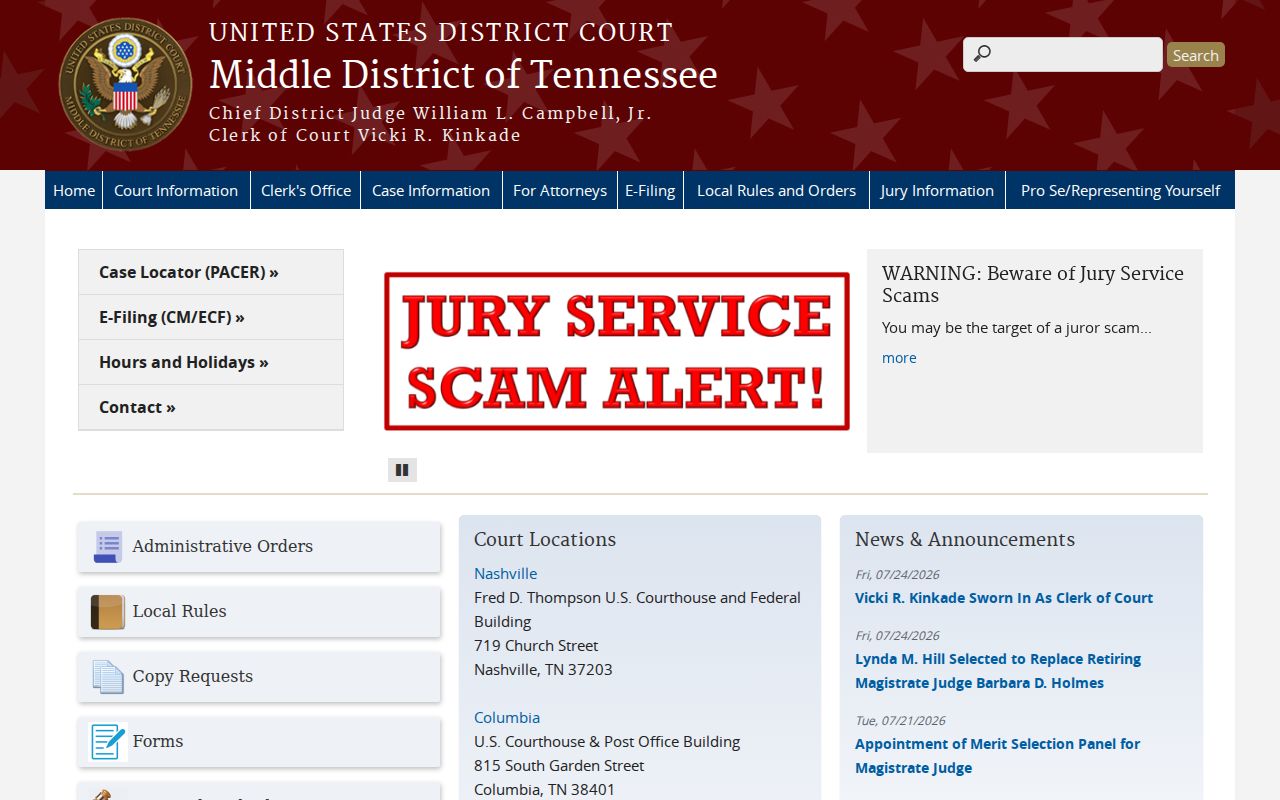
A federal case will never surface in a county docket search, and knowing that saves confusion. For bankruptcy, use the Middle District Bankruptcy Court site, which runs its own docket and calendar system for those matters.
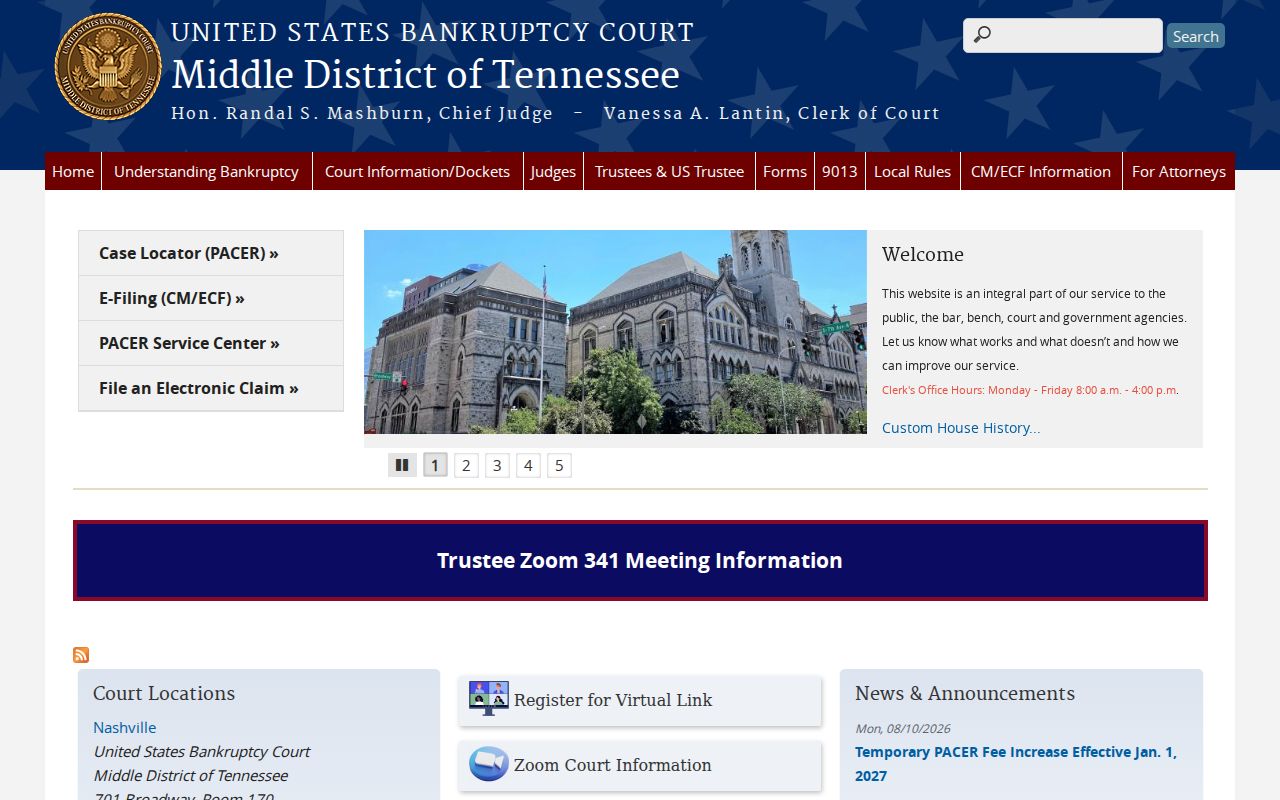
Federal systems carry the detail you would expect. A bankruptcy record can show the case, filings, hearing dates, judge, location, and attorneys. None of it feeds into Cumberland TnCIS, which stays a state-court docket only.
Cumberland Case Lookup and Appeals
An appeal leaves two trails. The Cumberland trial docket may show a notice of appeal. It may also show transcript work, or the record being sent upstairs. The appellate docket itself lives with the Tennessee Court of Appeals or Court of Criminal Appeals. Before searching, write down the trial case number. Add the date of the appealed order and the appellate identifier. The official Rule 3 page spells out when an appeal is a matter of right under that rule.
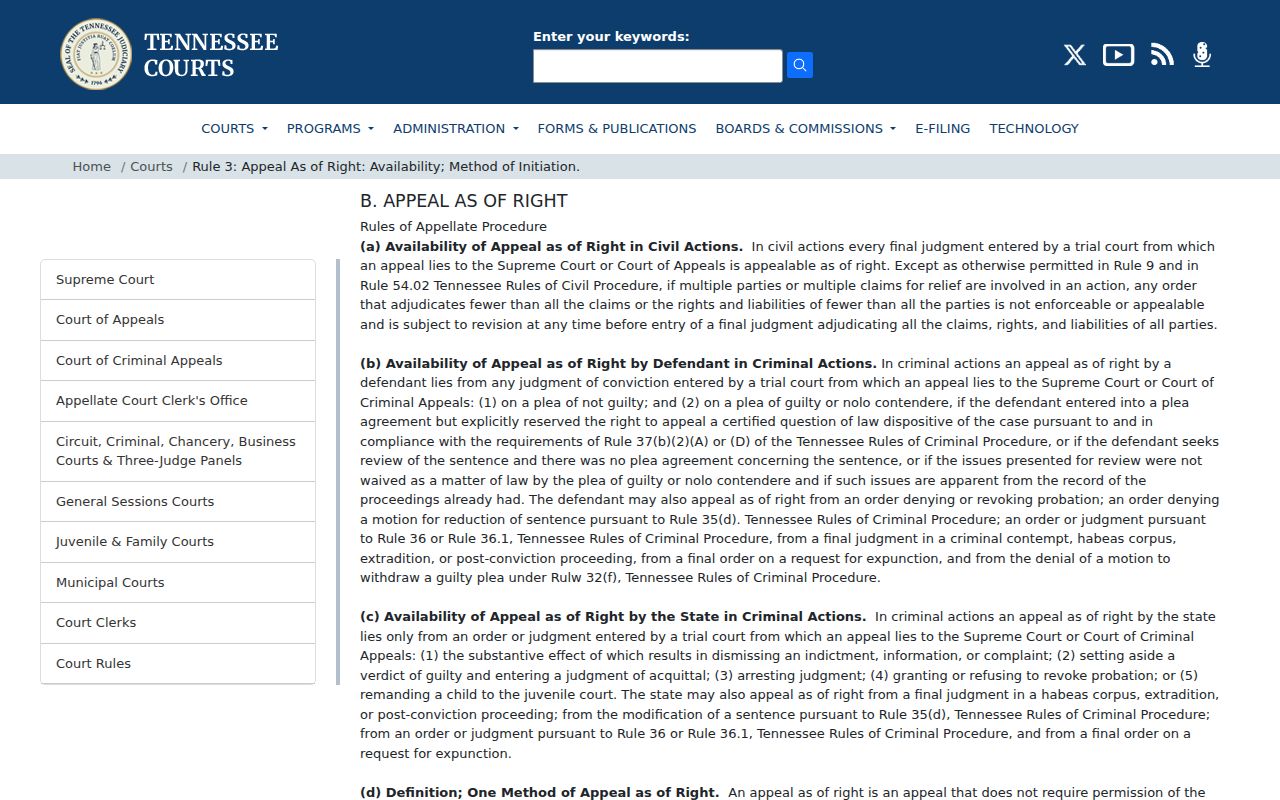
Rule 4 sets a general 30-day window. It runs from entry of the appealable judgment or order, subject to the rule's own terms and exceptions. Never treat a docket search result as your deadline calculation; confirm the date yourself.
Restricted Cases and Access Rules
Tennessee Supreme Court Rule 34 frames public access to court records. Under it, a record may be open or redacted. It may also be limited to authorized users, sealed by court order, or confidential by law or rule. Juvenile proceedings can fall under those limits. So can protected identifiers, medical details, victim information, grand-jury material, protected addresses, and protective-order filings.
Say "no matching public result under these search criteria" and stop there. That is not the same as saying a person has no case. Ask the clerk about a different spelling first. The court, year, archive, or case number may differ, or access may be restricted.
Public index rule: describe what the search displayed, preserve the inputs, and do not infer the contents of a sealed or missing filing.
Cumberland Case Lookup and PACER
PACER is federal, not a Cumberland County tool. It serves the federal courts. The official PACER pricing page lists $0.10 per page, a $3 cap on most case-specific documents and docket reports, exceptions such as transcripts, and a quarterly billing waiver when charges total $30 or less.
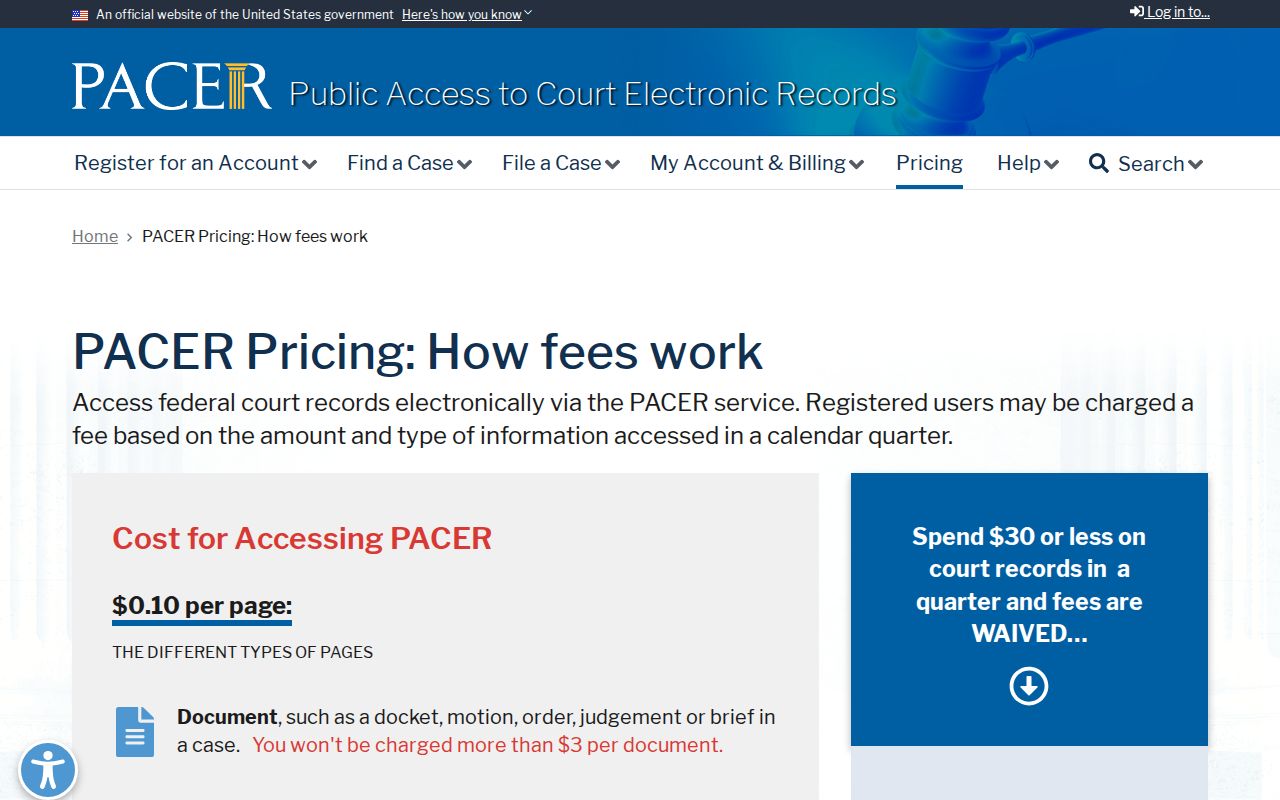
Those federal fees say nothing about Cumberland County copy charges. County policy sets its own baseline paper-copy rates, and certified or court-specific products need a current quote from the responsible clerk.